
The Reality Educators Are Facing Today
Artificial intelligence has quickly become part of how students learn, research, and write. Tools can now generate essays, summarize articles, suggest structure, and even refine language within seconds. Many students use these tools to support learning, but the same tools can also blur the line between assistance and authorship.
For educators, teaching assistants, and institutions, the challenge is no longer just grading submissions. It is understanding how the work was created and whether it reflects genuine learning.
The goal is not to police technology. The goal is to preserve fairness, encourage critical thinking, and ensure that assessment still measures understanding.
Why Traditional Review Methods Are No Longer Enough
Historically, markers relied on experience to evaluate authenticity. Familiar writing styles, gradual improvement, and in-class participation provided context. Today, AI can produce polished writing instantly, even for students who may struggle to express ideas independently.
This shift introduces new questions:
• Is the structure doing real thinking or just presenting information?
• Does the response genuinely answer the prompt?
• Are sources being used meaningfully or inserted mechanically?
• Does the tone reflect a consistent human voice?
• Is there depth of reasoning or only surface level explanation?
Educators need updated approaches that combine academic judgment with modern verification methods.
A Practical Checklist for Reviewing Assignments Today
Instead of trying to guess whether AI was used, focus on evaluating the quality of intellectual engagement. The following checklist helps shift attention back to learning outcomes.
1. Structure and Clarity: Ask whether the writing builds an argument or simply arranges information neatly. Authentic work often shows uneven development, moments of reflection, and gradual reasoning.
2. Relevance to the Prompt: Check whether the submission answers the specific question asked. AI assisted writing sometimes drifts into general explanations rather than addressing the task directly.
3. Use and Quality of Sources: Look for how references are integrated. Are they analyzed and interpreted, or just inserted to appear credible?
4. Consistency of Voice: Human writing usually carries a natural rhythm. Sudden shifts in tone or vocabulary may indicate heavy external assistance.
5. Depth of Analysis: Strong student work shows interpretation, critique, or personal synthesis. Surface level summaries often signal limited engagement with the material.
This approach keeps evaluation focused on academic standards rather than suspicion.
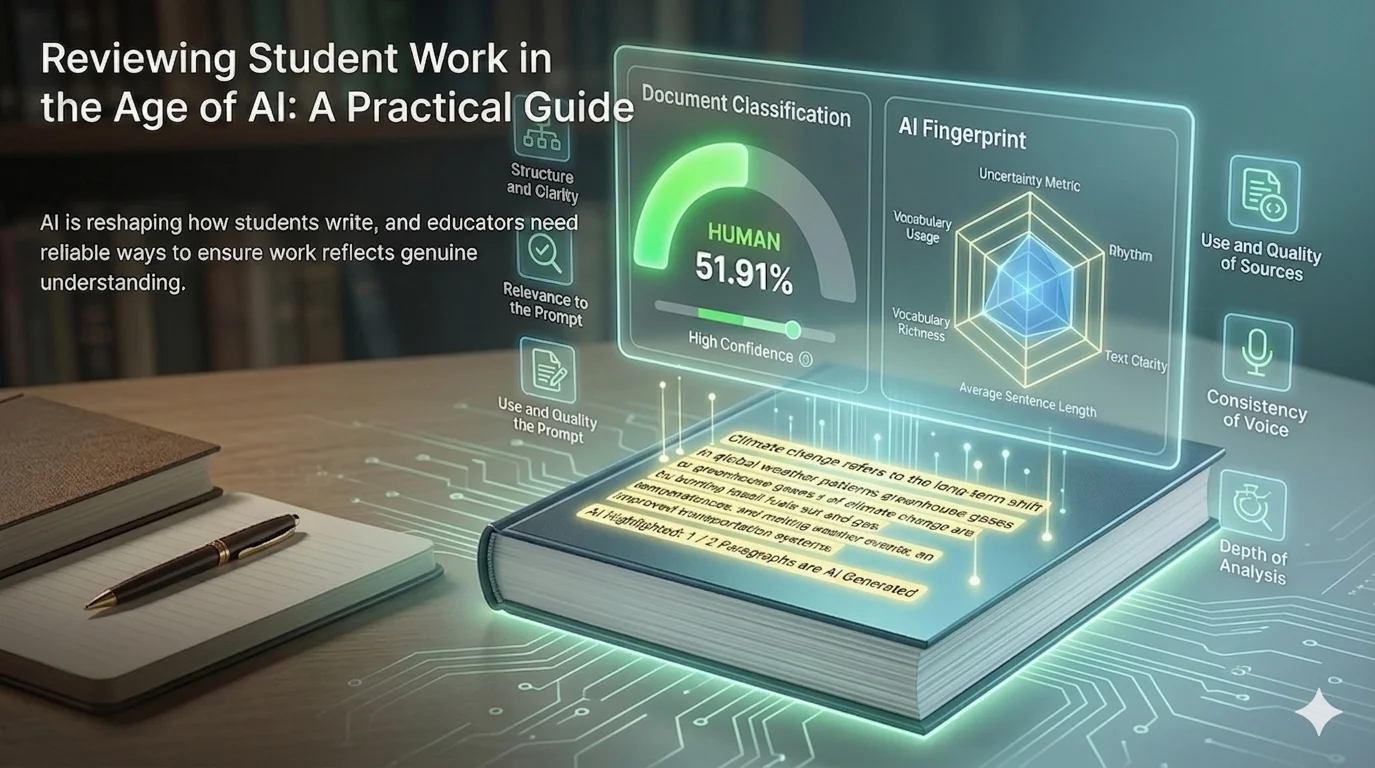
AI Content Detection Five Evaluation Points
Recognizing When Technology Should Support the Review Process
There are moments when educators need additional clarity, especially in large cohorts where personal familiarity with each student's writing is limited. This is where responsible AI detection tools can assist.
Used properly, these tools do not replace academic judgment. They provide signals, patterns, and explanations that help educators make informed decisions rather than assumptions.
The emphasis should always remain on transparency and evidence, not accusation.
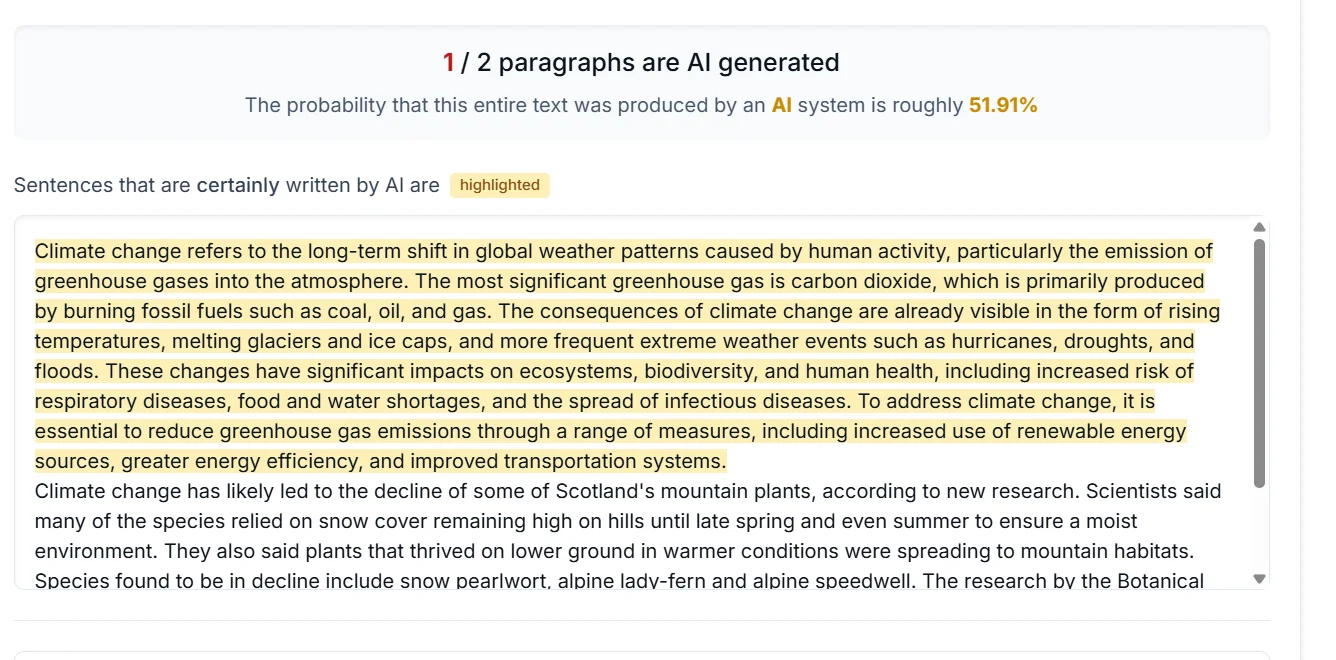
AI Content Detection Highlighted Text Analysis
Supporting Students While Maintaining Integrity
It is equally important to guide students on ethical AI use. Many learners are unsure what is acceptable. Clear expectations help them understand that AI can support brainstorming or structure, but their own reasoning must remain central.
When institutions provide both guidance and verification, they create an environment where technology enhances learning instead of undermining it.
This balance builds trust between educators and students while preparing learners for a professional world where AI tools will be part of everyday work.
Looking Ahead: Education and Career Readiness Are Now Connected
The conversation about AI in assignments is not just about preventing misuse. It is about ensuring students develop skills they will need beyond graduation.
Employers increasingly expect candidates to think critically, communicate clearly, and apply knowledge independently, even when using digital tools. By maintaining authentic assessment practices, institutions help students build those capabilities.
Technology should support that mission, not replace it.